When Cedar Rapids patients ask about veneers, the first fork in the road is material: porcelain or composite. Both can transform a smile in about two visits, but they are very different long-term commitments. Porcelain veneers are laboratory-made ceramic shells — typically lithium disilicate (e.max) — that bond to the front of the tooth. Composite veneers are sculpted directly onto the tooth by the dentist, layer by layer, from tooth-colored resin. The price gap is large; the lifespan gap is larger.
Porcelain runs $900 to $2,500 per tooth, with a national average near $1,765. Composite runs $250 to $1,500 per tooth, averaging around 800. But the durability numbers flip the comparison: well-made porcelain veneers survive $10 to $20+ years, with large longitudinal studies reporting survival rates above 91% at two decades. Composite resin veneers typically last 5 to 7 years before staining, chipping, or wear forces a repair or full replacement.
The short version
- Porcelain veneers cost $900 to $2,500 per tooth with a national average near $1,765, while composite veneers run $250 to $1,500 and average about $800.
- Well-made porcelain veneers survive 10 to 20-plus years, with large studies reporting survival above 91% at two decades, whereas composite resin veneers typically last only 5 to 7 years.
- Across a 10-tooth smile zone porcelain costs roughly $17,650 up front and about the same over 20 years, while composite starts near $8,000 but reaches $24,000-plus after two to three replacement cycles.
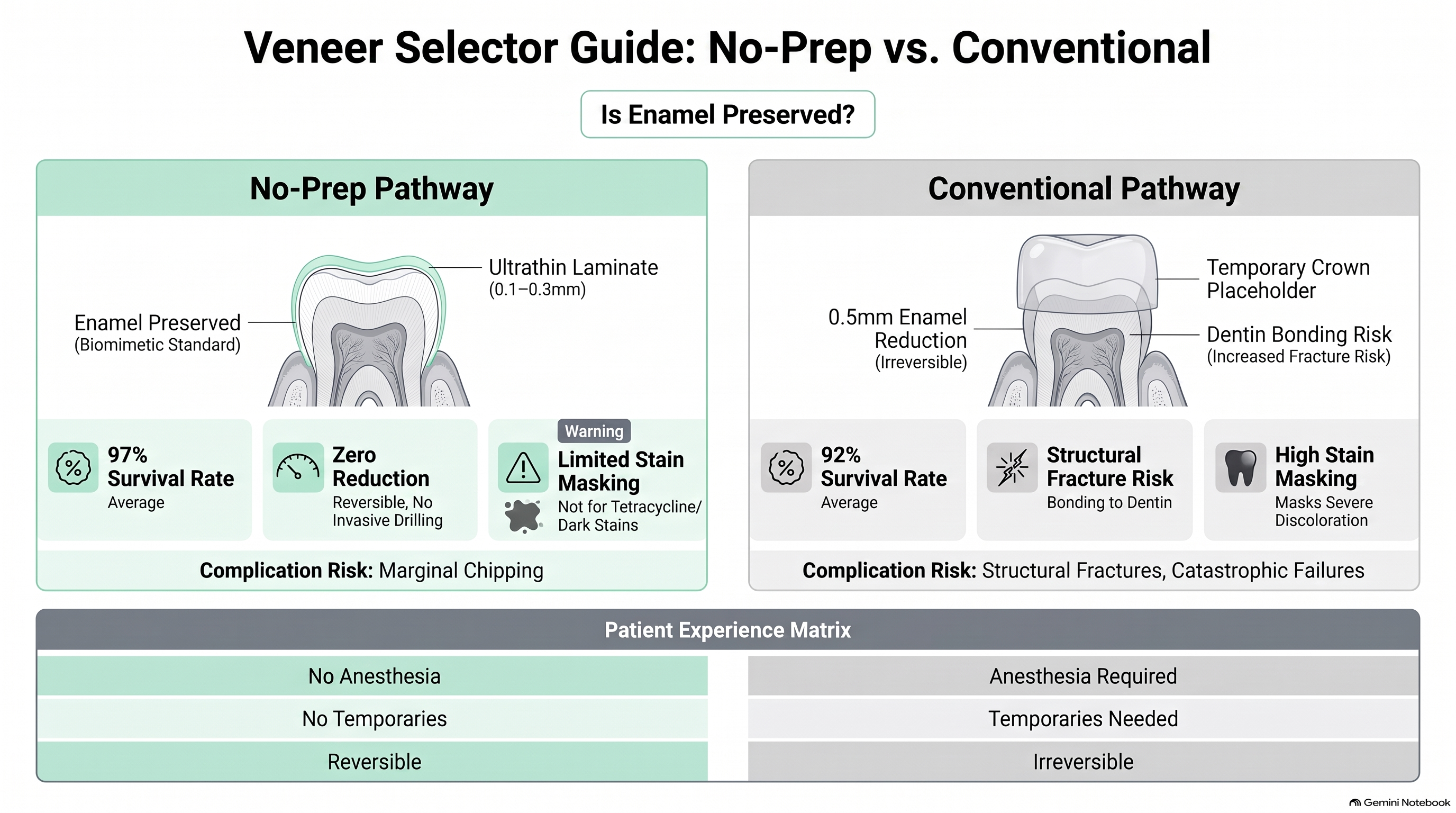
- Porcelain requires 0.3 to 0.5 mm of enamel preparation and resists staining, while composite needs minimal to no reduction but discolors from coffee, tea, or red wine and chips more easily.
- A chipped composite can often be repaired chairside in one visit, but a damaged porcelain veneer usually has to be remade entirely, which affects lifetime cost and convenience.
- Both materials can transform a smile in about two visits, and dentists may use Digital Smile Design previews or a lower-cost composite trial smile before committing to porcelain.
That is not a small difference. It is the difference between a one-time investment and a recurring one.
20-Year Cost of Ownership, 10-Tooth Smile Zone
| Porcelain veneers | Composite veneers | |
|---|---|---|
| Upfront cost | ~$17,650 | ~$8,000 |
| Typical lifespan | $10–$20+ years (91%+ at 20 yrs) | 5–7 years |
| Replacement cycles in 20 yrs | 0–1 | 2–3 |
| Approx. 20-year total | ~$17,650 | ~$24,000+ |
| Stain resistance | Very high | Moderate — absorbs coffee/tea |
| Tooth preparation | 0.3–0.5mm enamel | Minimal to none |
The structural difference matters too. Porcelain is ceramic — it does not absorb stains the way resin does, and it holds its polish for years. Composite is a polymer that slowly discolors, especially if you drink coffee, tea, or red wine daily, and it is more prone to chipping under chewing pressure. On the other side, composite is easier to repair: a dentist can touch up a chip in one visit, while a damaged porcelain veneer usually needs to be remade.
There is also a middle path. Many dentists now use Digital Smile Design to preview the finished smile on your photos before committing, and some practices offer composite veneers as a trial smile — a lower-cost way to live with the new look for a year or two before deciding whether porcelain is worth the upgrade. That staged approach is smart for anyone unsure about the investment.
The right choice depends on your budget, your habits, and how permanent you want the change to be. What should never happen is choosing without seeing the numbers. A good Cedar Rapids cosmetic dentist will show you both options priced side by side, tell you honestly how long each will last, and let you preview the result first. Our matched providers in Cedar Rapids and the surrounding Iowa communities do exactly that.
Maintenance matters too. Porcelain needs the same brushing, flossing, and six-month cleanings as natural teeth, plus a night guard if you grind — and it rewards that care by holding its finish for a decade or more. Composite needs a little more attention: avoid using the resin as a tool (no nail-biting, no opening packages with your teeth), and expect a yearly polish to keep it looking fresh. A provider who tells you the maintenance story up front, rather than after the chair, is the one worth trusting with the work.
Maintenance matters too. Porcelain needs the same brushing, flossing, and six-month cleanings as natural teeth, plus a night guard if you grind — and it rewards that care by holding its finish for a decade or more. Composite needs a little more attention: avoid using the resin as a tool (no nail-biting, no opening packages with your teeth), and expect a yearly polish to keep it looking fresh. There is no 'set it and forget it' option in cosmetic dentistry — but the effort is small next to the return. A provider who tells you the maintenance story up front, rather than after the chair, is the one worth trusting with the work, because honesty about upkeep is usually a preview of honesty about everything else.