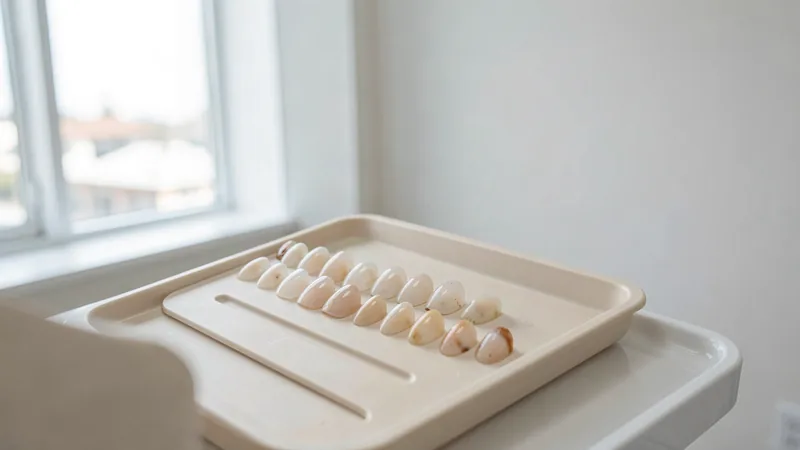
When a tooth is cracked, worn, or damaged by decay, patients are often told the answer is a crown — a full covering that requires shaving the tooth down on every side. But there is a second, far more conservative path that many people never hear about: biomimetic restorations such as inlays and onlays. The difference is not cosmetic. It is biomechanical, and it changes how much of your natural tooth survives, how your bite handles force, and even your odds of needing a root canal. Here is what the numbers actually look like. If you are here looking into dental crowns, the sections below walk through the process from the first quote to the finished job.
The Biomechanical Comparison at a Glance
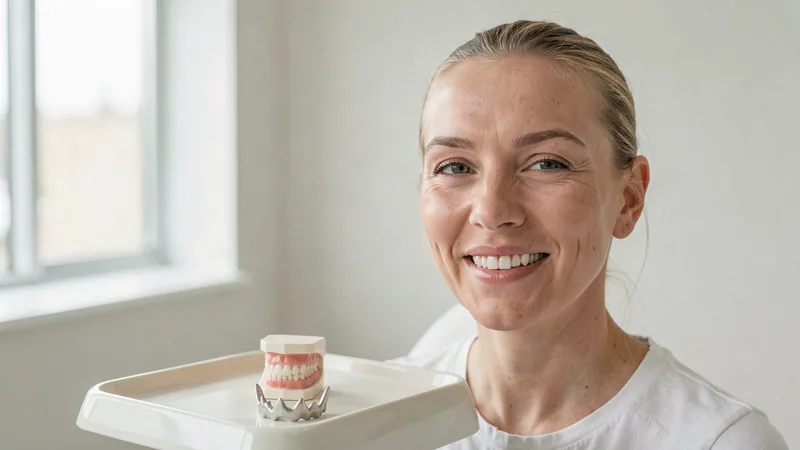
Tooth Reduction: 60–75% vs. 10–30%
The most consequential number on the table is the first one. Preparing a tooth for a traditional crown means removing 60% to 75% of its structure — a circumferential shave-down that leaves a thin shell of natural tooth. A biomimetic inlay or onlay, by contrast, removes only 10% to 30%, and only where the damage actually is. Enamel and dentin are living, load-bearing tissues; the more of them you keep, the stronger the tooth remains under decades of chewing.
The short version
- A traditional full-coverage crown removes 60% to 75% of the tooth circumferentially, while a biomimetic inlay or onlay removes only 10% to 30% and only where the damage actually is.
- Crown margins sit subgingivally below the gum line where they create a ledge that traps plaque, while biomimetic margins sit supragingivally about 0.5 mm above the gum line in a naturally self-cleaning zone.
- Conservative biomimetic preparation decreases the clinical need for root canals by 90% to 95%, because more dentin stays between the restoration and the pulp.
- A crown behaves like a rigid cap that concentrates biting force at the cervical margins where teeth are weakest, while biomimetic materials flex with the tooth, absorb stress across the structure, and seal chemically with no micro-gap for bacteria.
- A fractured crown must be cut off and fully replaced along with the preparation, impression, and lab work, while a chipped biomimetic inlay can often be repaired chairside with additive resin in a single appointment.
- Inlays and onlays are not appropriate for every tooth, since one with too little remaining structure may genuinely need full coverage, so patients should ask how much of their tooth will be removed and whether a bonded alternative works.
Margins and Gums: The 0.5mm Rule
Where the restoration meets the tooth matters as much as how much tooth is removed. Crown margins are typically placed subgingivally — below the gum line — where they create a ledge that traps plaque and invites chronic inflammation. Biomimetic margins sit supragingivally, about 0.5mm above the gum line, in a zone that is naturally self-cleaning and easy to keep healthy. Healthier gums around a restoration mean less bleeding, less recession, and fewer surprises at your six-month checkup.
Root Canals: A 90–95% Reduction in Risk
Here is the statistic patients remember: conservative, biomimetic preparation decreases the clinical need for root canals by 90% to 95%. Traditional crown preparation generates heat and removes insulating tooth structure, which can traumatize the nerve; over time, microleakage at the crown margin can let bacteria reach the pulp. The nerve dies, and the tooth needs a root canal — often years after the crown was placed. Biomimetic preparations keep more dentin between the restoration and the pulp, dramatically lowering that risk.
How Force Travels Through Your Tooth
A traditional crown behaves like a rigid cap. Biting force hits that cap and concentrates at the cervical margins — exactly where teeth are weakest — which is why crowned teeth can fracture at the gum line. Biomimetic materials are engineered to flex with the tooth: layered composites and ceramics expand and give in ways that mimic enamel and dentin, absorbing stress across the whole structure instead of dumping it at one point. And because the restoration is chemically bonded rather than mechanically cemented, the seal is continuous — bacteria have no micro-gap to enter through.
Repairability When Things Go Wrong
No restoration lasts forever untouched. When a crown chips or fractures, the entire crown must be cut off and replaced — a full redo of the preparation, the impression, and the lab work. When a biomimetic inlay chips, the dentist can often repair the spot chairside with additive resin, in a single appointment, without removing the rest of the restoration. Preserving the natural tooth walls keeps every future option open.
Which Approach Is Right for Your Tooth?
Biomimetic inlays and onlays are not appropriate for every situation — a tooth with too little remaining structure may genuinely need full coverage. But the decision should be made on evidence, not habit. If a dentist in Cedar Rapids, Iowa recommends a crown, ask how much of your tooth will be removed and whether a bonded inlay or onlay is a viable alternative. Many patients in Cedar Rapids, Iowa are never told the conservative option exists. When you understand the biomechanics — tooth removal, margin placement, nerve risk, force distribution, leakage, and repairability — you can have an informed conversation with your dentist in Cedar Rapids, Iowa about keeping as much of your natural tooth as possible.