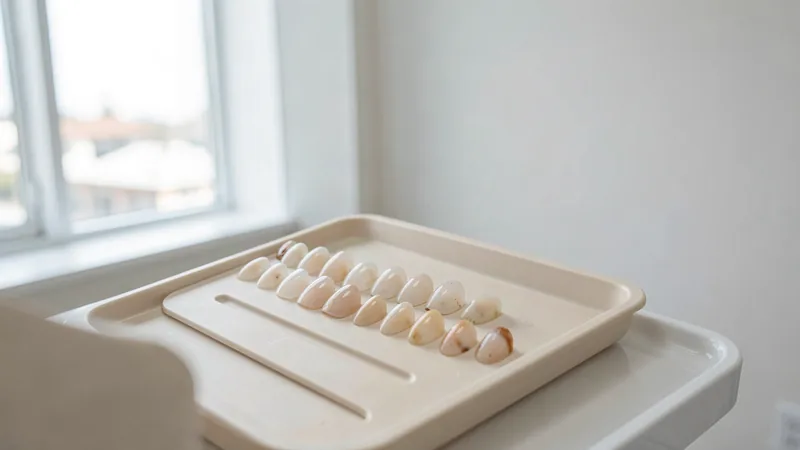
A smile makeover is one of the few purchases you wear every single day — which is exactly why it deserves to be treated as a long-term investment rather than a one-time expense. Patients in Cedar Rapids, Iowa are increasingly approaching cosmetic dentistry with the same planning rigor they bring to a home renovation: understanding real costs, comparing materials, and staging the work over time. This prospectus gives you the numbers you need to plan with confidence. If you are here looking into smile center, the sections below walk through the process from the first quote to the finished job.
The smile transformation boom

The short version
- The global cosmetic dentistry market crossed $31 billion in 2026 and is forecast to grow 8.55% a year through 2035, nearly triple the roughly 3% growth of broader healthcare services.
- US consumer dental spending reached $194 billion in 2025, and purely aesthetic services were $4.25 billion in 2024, projected to reach $8.88 billion by 2034.
- The per-tooth trap is the biggest budgeting mistake: a single $1,765 veneer multiplied across six to ten smile-zone teeth puts a full porcelain set near a $15,500 baseline.
- Standard benchmarks include $1,765 average per porcelain veneer, $800 per composite resin veneer, $5,100 for clear aligners, $4,500 for one implant, and $24,000 for an All-on-4 arch.
- Insurance excludes pure cosmetic work but often covers hybrid restorative procedures at 50 to 80 percent, and HSA or FSA dollars can cut the real cost by up to 30 percent depending on tax bracket.
- Over 20 years a 10-tooth porcelain case runs about $18,500 versus $25,500 to $33,500 for composite, which needs three replacement cycles inside the same window.
Avoid the per-tooth trap
The single biggest budgeting mistake patients make is reading a per-tooth price and assuming it represents the whole-smile cost. A single porcelain veneer quoted at $1,765 sounds modest — until you multiply it across the six to ten teeth in the natural “smile zone.” National procedural data puts a full set of porcelain veneers (six to eight teeth) at an average baseline of roughly $15,500. Always ask for the whole-smile total, not the per-tooth teaser.
Realistic price benchmarks (2025–2026)
| Clinical procedure | Typical price range | National mean / baseline |
|---|---|---|
| In-office teeth whitening | $300–$800 per session | 600 |
| Take-home professional whitening | $100–$400 per kit | 300 |
| Composite dental bonding | $150–$600 per tooth | 430 |
| Cosmetic contouring | $150–$300 per tooth | 215 |
| Cosmetic gum contouring | $100–$600 per tooth | 350 |
| Porcelain veneer (lithium disilicate) | $900–$2,500 per tooth | $1,765 |
| Prepless ultra-thin veneer | $1,200–$3,000 per tooth | $2,100 |
| Composite resin veneer | $250–$1,500 per tooth | 800 |
| Porcelain/ceramic crown | $1,200–$3,000 per tooth | $1,400 |
| Clear aligners (Invisalign) | $3,000–$8,500 per case | $5,100 |
| Single dental implant (complete) | $2,000–$6,000 per unit | $4,500 |
| All-on-4 implant reconstruction | $15,000–$30,000+ per arch | $24,000 |
| Therapeutic/aesthetic dental Botox | $300–$600 per target area | 450 |
Three investment tiers for smile makeovers
- Tier 1 — The enhancement makeover ($600–$5,000): in-office whitening combined with targeted composite bonding on visible front teeth and minor contouring. Completed in 1 to 2 visits — often a single day. Ideal for straight, healthy teeth that need a rapid, high-impact refresh.
- Tier 2 — The cosmetic transformation ($5,000–$20,000): 6 to 10 porcelain veneers (IPS e.max lithium disilicate) or ceramic crowns, sometimes combined with clear aligners. Timeline: 2 weeks to 6 months. For severe staining, wear, spacing, or alignment deficits.
- Tier 3 — The full smile redesign and full-mouth restoration ($20,000–$60,000+): implants, bone grafting, sinus lifts, periodontal therapy, and full-arch rehabilitation. Timeline: 3 to 12+ months because of surgical healing and osseointegration phases.
Insurance and pre-tax dollars
Pure cosmetic procedures — whitening, cosmetic veneers, reshaping for looks alone — are excluded from standard dental insurance. But hybrid procedures with a documented restorative purpose are frequently covered at 50% to 80% up to your annual maximum. A ceramic crown protecting a tooth severely compromised by decay, composite bonding that repairs active cavities, and implants replacing missing roots to prevent bone loss all qualify. You can also fund eligible treatment with pre-tax Health Savings Account (HSA) or Flexible Spending Account (FSA) dollars, effectively reducing your real cost by up to 30% depending on your tax bracket. Ask your dentist to submit a written pre-authorization with diagnostic radiographs and photographs before treatment begins, so the cosmetic-versus-restorative classification is settled in advance — not after the bill arrives.
The 20-year math: porcelain vs. composite
Cheaper upfront is not cheaper over time. Composite veneers stain, wear, and chip, requiring replacement cycles every 5 to 7 years; porcelain veneers routinely survive $15 to $20+ years, with a 91% survival rate at 20 years. For a 10-tooth case, the 20-year comparison is stark: porcelain at $1,765 per tooth is $17,650 upfront and roughly $18,500 over 20 years; composite at 800 per tooth is $8,000 upfront, but three replacement cycles push the 20-year total to $25,500–$33,500.
Strategic phasing: spreading the cost
You do not have to pay for a smile transformation all at once. Staged across benefit years, treatment can be budgeted in logical, affordable steps while maximizing annual insurance caps:
- Phase 1 — Foundational health and whitening: resolve active decay, brighten the baseline, and minimize the number of veneers ultimately required.
- Phase 2 — Upper visible smile zone (6 to 8 teeth): place the permanent ceramic restorations that matter most for your smile, letting the budget recover.
- Phase 3 — Lower teeth and posterior work: complete aligners, lower veneers, or posterior crowns in a subsequent benefit year.
Ten questions to ask before you commit
- What veneer or restorative material do you recommend for my case, and why?
- Which master dental laboratory partners with the practice to hand-craft restorations?
- What is the complete itemized cost, including prep, temporary “trial smiles,” and follow-ups?
- Do you offer in-office payment installments or work with third-party financing?
- Do your third-party plans include 0% APR promotional periods (6 to 24 months)?
- What is your revision or follow-up care policy if a restoration chips or debonds early?
- How many full smile designs similar to mine have you completed in the past year?
- Can I see before-and-after portfolios of the practice's actual patients?
- What is the expected timeline from diagnostic wax-up to final cementation?
- Can we design a phased plan that spreads the investment over two or more benefit years?
Your smile is an asset. Planned like one — with real numbers, honest material comparisons, and a phased timeline — a smile makeover in Cedar Rapids pays dividends in confidence and function for decades. And in Iowa, where patients increasingly compare both quality and cost, the practices that answer these ten questions directly are the ones worth your investment.